

Luxury Garden Design Trends For Summer 2026
Summer 2026 marks a significant moment in garden design. The most compelling outdoor spaces being created right now are no longer simply about attractive planting or a well-laid patio; they are carefully considered extensions of the home itself, designed to be lived in, enjoyed throughout the seasons, and valued for decades to come.
Luxury garden design trends this summer are centred on creating outdoor spaces that feel genuinely personal. The most influential gardens being created this season are designed to reflect the architecture of the house, the character of the landscape, and the way the people who own them actually live.
Sustainability, craftsmanship, and sophisticated planting are all shaping the direction of high-end garden design in 2026 as enduring principles and are setting the foundation for the future of the landscaping industry.
As luxury garden designers, Andy Stedman Design has first-hand experience with these garden design trends and knows what it takes to create enduring outdoor spaces. In this post, we are sharing the top luxury garden design trends for summer 2026 to inspire your project.
Whether you are planning a new contemporary garden or reconsidering an established outdoor space, these are the trends worth knowing about this summer.
The Biggest Luxury Garden Design Trends For Summer 2026
From refined materials to wellness-led planting, the themes defining premium outdoor spaces this year are as considered as they are beautiful. Here is what the finest garden designers are working with right now:
Outdoor Spaces That Feel Like Interior Rooms
The boundary between inside and out continues to dissolve. In the most beautifully designed gardens of 2026, covered seating areas, outdoor lounges, and dining terraces feel like genuine rooms.
To create outdoor spaces that feel like a true extension of the home, they need to be designed with the same attention to proportion, lighting, and material quality you would find inside the house.
This goes well beyond a garden furniture set on a paved terrace. Integrated lighting systems, bespoke joinery, high-performance weatherproof fabrics, and architectural overhead structures are creating outdoor living spaces that function throughout the year. Large-format stone flooring that flows directly from the interior, fixed outdoor kitchens with prep areas and induction cooking, and carefully zoned dining and relaxation spaces all contribute to a sense of cohesion between home and garden.
For homeowners investing in professional luxury garden design, this is perhaps the most significant shift of recent years. The garden is no longer designed separately from the house; it is an integral part of it.
For more inspiration regarding outdoor living and creating stunning spaces, see our post Garden Design for Outdoor Living: Patios, Kitchens & Entertaining Areas.

Natural Materials With Warm, Timeless Character
The cool grey paving that dominated garden design for much of the past decade is giving way to something warmer, more textural, and altogether more enduring.
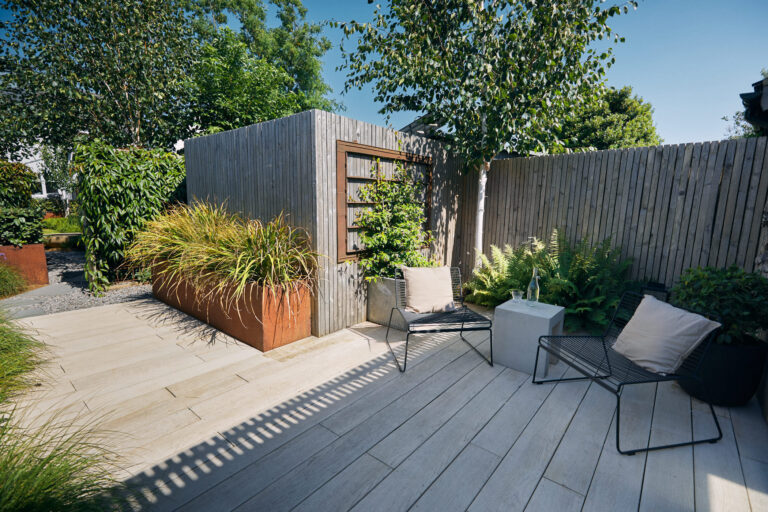
Natural stone in honey, buff, and sandstone tones is increasingly favoured, alongside hand-made clay pavers, reclaimed York stone, and weathered metals that develop a beautiful patina over time.
Likewise, oak is appearing in pergolas, gates, raised beds, and bespoke garden structures. Its warmth and natural grain work in harmony with both traditional and contemporary settings. Alongside stone and timber, textured finishes are being used to add depth and tactility to garden surfaces, moving away from the smooth, uniformly flat aesthetic of previous years.
These materials share an important quality as they age gracefully. Choosing natural, high-quality materials in a bespoke garden design is as much an investment decision as it is an aesthetic one. A well-laid natural stone terrace, properly detailed and installed, will look better in twenty years than the day it was laid.
Choosing enduring materials like this ensures your garden remains an asset for years to come, offering not only personal value but enhanced property value. To learn more, see our post Landscaping for Property Value: How Garden Design Can Increase Your Home’s Worth.
Beautiful Planting With A Softer, More Natural Feel
Rigid, symmetrical planting schemes are being replaced by something altogether more relaxed and layered. The most refined gardens of 2026 combine strong structural elements, such as carefully placed specimen shrubs, clipped hedging, and architectural trees, with flowing perennial planting, ornamental grasses, and seasonal colour that shifts and evolves throughout the year.
Naturalistic planting styles draw from the work of landscape designers who have long championed the idea that gardens should support biodiversity alongside beauty. Salvias, verbenas, ornamental grasses such as Stipa and Pennisetum and flowering perennials planted in generous drifts create movement, texture, and a sense of abundance that feels both contemporary and timeless.
Purposeful planting, which means selecting plants that serve multiple functions, including privacy, fragrance, shade, and wildlife value, is considered one of the defining approaches of the year. In a well-designed luxury garden, every plant earns its place.
For more planting ideas and inspiration, see our post Year-Round Garden Design: Planting for Four Seasons Of Beauty.
Luxury Gardens Designed Around Wellness
The relationship between garden design and personal wellbeing has moved to the centre of many conversations with clients.
Quiet seating areas positioned away from the main terrace, water features chosen for the sound they create rather than as focal points alone, sensory planting with carefully considered fragrance and texture and generous shade structures that make extended time outdoors genuinely comfortable. All of these elements contribute to a garden that genuinely supports the way people want to feel.
Calm colour palettes, such as silvers, soft purples, whites, and warm greens, reinforce a sense of quiet and ease. Privacy planting that screens neighbouring properties without requiring high fencing creates the sense of an enclosed sanctuary.
These are not decorative afterthoughts but rather considered design decisions that determine how much a garden is actually used and valued.

Climate-Conscious Luxury
Sustainability has become an integral part of high-quality contemporary garden design rather than a compromise to be made within it.
The most thoughtful luxury garden designers are now specifying permeable paving that manages surface water naturally, sustainable drainage systems that work with the landscape rather than against it and drought-tolerant planting suited to the increasingly warm, dry summers experienced across the UK.
Reclaimed brick and stone, long-lasting timber certified from responsibly managed sources, and rainwater harvesting systems integrated discreetly into the garden structure are all becoming standard considerations in premium design.
Mediterranean-influenced planting, such as lavender, rosemary, ornamental grasses, and drought-resilient perennials. brings year-round structure and fragrance while reducing the garden’s dependence on supplementary irrigation.
Climate-resilient design is also, in many respects, low-maintenance design. Choosing materials and plants that perform well in real conditions over time is a mark of genuine design intelligence. A great example of this is a gravel garden, as we explore in our post Effortless Elegance: A Guide to Low Maintenance Gravel Garden Design.
Multi-Functional Garden Zones
Homeowners are asking more of their gardens than ever before. A single outdoor space is now expected to accommodate morning coffee, family lunches, evening entertaining, children’s play, quiet relaxation, and in some cases, a discreet garden studio or home workspace all within the same plot.
Thoughtful zoning addresses this without making the garden feel fragmented. Well-considered layout design uses changes in level, planting, materials, and lighting to define distinct areas that flow naturally from one to another.
A dining terrace that transitions into a relaxation area, which in turn leads to a more informal planted zone and beyond to a hidden seating space, where each area feels distinct, but the garden reads as a coherent whole. Fire pits and permanent fire features extend the outdoor season well into autumn. Outdoor kitchens turn the garden into a genuine destination for entertaining.
When these elements are designed with the same precision applied to the rest of the space, the result is a garden that is used more fully and enjoyed far more deeply.
For more inspiration on garden zoning and family-friendly ideas, see our post How To Design A Family-Friendly Garden.
Which Luxury Garden Design Trends Will Stand The Test Of Time?
While trends can provide inspiration, the most successful luxury gardens are built around timeless design principles.
Here are the features that will continue to add value long after seasonal trends have changed:
- Prioritise Great Design: A well-planned layout with balanced proportions and a strong connection to the home will always outperform trend-led features alone.
- Choose Timeless Materials: Opt for natural stone, quality timber and other premium materials that are selected for their durability, character and ability to age beautifully.
- Design For The Long Term: Select planting that will establish, mature and provide year-round structure and seasonal interest rather than relying on short-lived trends.
- Create Functional Spaces: The best gardens are designed around how you live, with areas for relaxing, entertaining, dining and enjoying the outdoors throughout the year.
- Invest In Quality Craftsmanship: Expert design and professional construction ensure your garden not only looks exceptional when completed but continues to improve as it matures.
- Focus On Enduring Principles: The strongest garden trends are those built on lasting foundations, including thoughtful spatial planning, carefully considered planting and high-quality materials that remain relevant for years to come.
How A Luxury Garden Designer Brings These Ideas Together
The difference between a garden that has been inspired by current thinking and one that has been genuinely designed lies in the process.
A skilled luxury garden designer takes time to understand a client’s lifestyle, the architecture of the property, the character of the surrounding landscape, and the practical requirements of how the space will be used throughout the seasons.
From this understanding, a bespoke design is developed where every element is considered in relation to every other. Professional project management throughout the process ensures that the design is realised to the standard it deserves.
The right contractors, the right materials and a level of attention to detail that makes a lasting difference to the finished result.
To learn more, see our post How to Choose the Right Garden Designer for Your Project.
Conclusion
The luxury garden design trends emerging for summer 2026 reflect a growing appreciation for outdoor spaces that are as functional as they are beautiful. From seamless indoor-outdoor living and natural materials to climate-conscious planting and carefully zoned layouts, today’s most successful gardens are designed to enhance everyday life while standing the test of time.
While trends can provide valuable inspiration, they should always be viewed as part of a wider design vision. The most memorable gardens aren’t defined by a single feature or fashionable material, but by thoughtful planning, exceptional craftsmanship and a design that responds to the character of the property and the people who live there.
At Andy Stedman Design, we believe every garden should be unique. By combining timeless design principles with contemporary ideas, we create bespoke landscapes that remain elegant, practical and enjoyable for many years to come.
If you’re considering a luxury garden transformation, our experienced team can help you create a garden that reflects your lifestyle while embracing the very best of modern garden design.
Contact Us Today
To learn more about our services or to request a consultation, please contact the team today.
Frequently Asked Questions
What is trending in luxury garden design for 2026?
The leading luxury garden design trends for Summer 2026 include sophisticated indoor-outdoor living spaces, warm natural materials such as stone and oak, naturalistic layered planting, wellness-focused garden spaces, climate-resilient design, and multi-functional zoned layouts. Each of these trends focuses on quality, longevity and thoughtful design rather than short-lived aesthetic choices.
What materials are popular in contemporary garden design?
Contemporary garden design in 2026 favours natural, tactile materials with warmth and character. Natural stone in buff, sandstone, and honey tones is widely used for terracing; oak is a popular choice for pergolas, raised structures, and bespoke garden features. Weathered metals, textured stone finishes, and sustainably sourced timber are also prominent in high-end contemporary schemes.
Is it worth hiring a luxury garden designer?
For homeowners who want a garden that genuinely enhances their property and the way they live, professional garden design offers excellent long-term value. A skilled designer brings spatial planning expertise, material knowledge, horticultural understanding, and project management experience that is difficult to replicate without years of professional practice.